About Biometric Access Card
Technical Specification
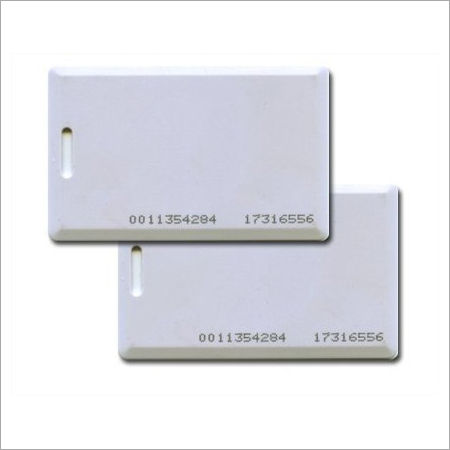
Model Name/Number | ACCESS CARDS |
Card Type | Proximity Card |
Type | One Sided |
Usage/Application | Office/College |
Surface Finish | Matt |
Color | WHITE |
Material | Plastic |
Advanced Biometric SecurityThe card incorporates a fingerprint sensor and stores biometric templates securely on-card using AES-128 encryption. This method ensures user data is not transmitted during authentication, minimizing the risk of data breaches. Its anti-microbial, water-resistant surface adds an extra layer of safety and durability, making it suitable for demanding environments.
Long-Lasting and Durable DesignBuilt from multi-layer composite and finished with glossy PVC, the card offers excellent resistance to water and scratches, while also preventing virus contamination. The card maintains functionality after extended use and offers data retention for at least ten years, making it cost-effective for large organizations.
FAQs of Biometric Access Card:
Q: How does the Biometric Access Card authenticate users securely?
A: The card utilizes an embedded fingerprint sensor and stores the fingerprint data securely on the card itself. When presented to a compatible reader, it powers up passively and authenticates users by comparing the live scan to the encrypted biometric template, ensuring privacy and security.
Q: What benefits does on-card storage of biometric data provide?
A: Storing the biometric template directly on the card (rather than a server) enhances security by preventing central database attacks. Only the cardholders data is encrypted with AES-128 and never transmitted, reducing the risk of breaches and maintaining user privacy.
Q: When should this card be used for access control?
A: The card is ideal for environments requiring stringent security, such as corporate offices, secure labs, or data centers. It is suitable for daily use and maintains performance in temperature ranges from -20C to +60C, ensuring reliability across seasons.
Q: Where can the Biometric Access Card be deployed effectively?
A: It can be implemented in offices, educational campuses, research facilities, government buildings, and any location in India where secure, contactless access control with biometric verification is preferred.
Q: What is the process for enrolling fingerprints onto the card?
A: Enrollment typically occurs at designated access points managed by the distributor or supplier. The users fingerprint is captured and encrypted directly onto the cards 8 KB EEPROM, with no network transmission, ensuring security during setup.
Q: How does the cards dual-frequency and RFID communication enhance usage?
A: Supporting both 13.56 MHz and 125 KHz frequencies ensures compatibility with a wide range of access readers. The contactless RFID interface enables rapid and convenient authentication from 2 to 10 cm, streamlining entry and exit processes.
Q: What makes this biometric card durable and virus-proof?
A: Constructed with a multi-layer composite structure and glossy PVC surface, the card is water-resistant, anti-scratch, and features anti-microbial properties. This ensures longevity and safety for frequent handling in various environments.
 Send Inquiry



 Send Inquiry


 Send Inquiry
 English
 Spanish
 French
 German
 Italian
 Chinese (Simplified)
 Japanese
 Korean
 Arabic
 Portuguese